Tuesday, June 28, 2016

El Mastin: None Are More Noble / Ninguno es más noble


El Mastin: None Are More Noble

Copyright 2016, by Brenda M. Negri

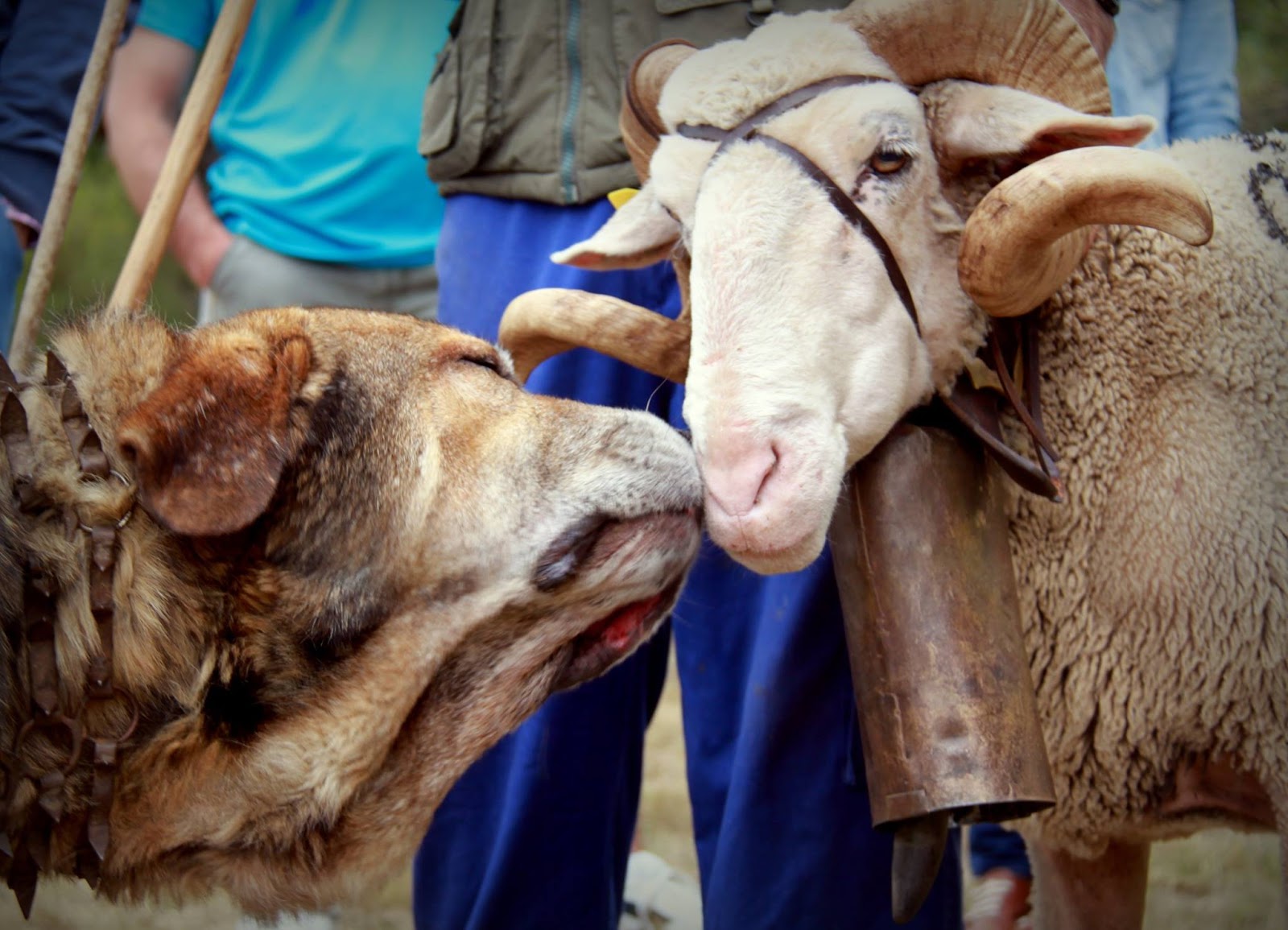
Innate to the Spanish Mastiff, is a grace, a nobility, a presence mere words fail to describe, that must be seen in the flesh to understand.  I sense it most when I am with my Spanish Mastiffs and my sheep and cattle.  The measured gaze of an old soul gazing upon its flocks and sheep, an image of dignity.  Compassionate, magnanimous, never unjust.  To truly take the time to understand in depth this great breed, man must leave his ego at the door.  There is no room for braggart owners, arrogance or petty, small minds in the world of the Mastin.  These giants require respect.  They expect more from their owner than the average dog; they expect you will have the intelligence and the discernment to be able to understand them, and live with them.  They are royalty amongst guardian breeds, and need not prove anything.  The rich history of Spain runs through their veins, the shepherd, the working peon, the eaters of simple bread and cheese, who trek miles with their flocks, sleeping on the ground under stars.  From the poorest shepherd's home has come the greatest of all guardians, and I am honored to share my life with them.  I am humbled by their affection and loyalty, they are like lions, and nothing could be more noble.

Innata para el mastín español, es una gracia, una nobleza, una presencia meras palabras no pueden describir, que debe ser visto en la carne de entender. Tengo la sensación de que la mayoría cuando estoy con mis mastines españoles y mis ovejas y el ganado. La mirada medido de una vieja alma contemplando sus ovejas y ovejas, una imagen de dignidad. Compasivo, generoso, nunca más injusta. Para realmente tomar el tiempo para comprender en profundidad esta gran raza, el hombre tiene que dejar su ego en la puerta. No hay espacio para los propietarios de fanfarrones, la arrogancia o pequeños, pequeñas mentes en el mundo de la Mastin. Estos gigantes exigen respeto. Se esperan más de su dueño que el perro promedio; que esperan que usted tiene la inteligencia y el discernimiento para poder comprenderlas, y vive con ellos. Son Royalty entre las razas de la guarda, y no necesita probar nada. La rica historia de España corre por sus venas, el pastor, el peón de trabajo, los comedores de pan simple y queso, que trek millas con sus rebaños, durmiendo en el suelo bajo las estrellas. Desde la casa del pastor más pobre ha llegado el mayor de todos los guardianes, y me siento honrado de compartir mi vida con ellos. Me siento muy honrado por su afecto y lealtad, son como leones, y nada podría ser más noble.

Photos courtesy of Sociedad Canina de Leon, Ganadaria Fial / Mastines de Abelgas and the author.


Wednesday, June 8, 2016

Foxtails! Protect Your Livestock Guardian Dog from This Summer Scourge


Foxtails! The bane of any stockman's existence in summer.


In parts of Northern America each summer brings the blooming of the dreaded foxtail or diaspore grass.  Grasses known as foxtail include:


This invasive grass sprouts a wheat-like head of faceted seed shafts that resemble the tail of a fox.  As they dry out and mature, they dislodge from the base, and become easily attached to a dog's fur as he passes through them.  Or, if the dog puts his face in a growth of foxtail, they can pierce through eyes or become lodged in an ear canal.  On the ground, they are picked up in a dog's feet and can become imbedded between toes and pierce the skin.  Once in the dog's flesh, if not caught in time they can puncture and travel throughout the dog's body just by entering a part of it's body, whether it be an ear, toe, eye or other area.  Eventually they will emerge, but the pain and discomfort they cause are considerable.  In rare cases foxtails can puncture vital organs and cause death.

Long haired dog breeds are more susceptible to picking up foxtails however, short haired dogs can pick them up too.  Also, the shape of a dog's foot comes to factor in as to if he is prone to picking up foxtails or not.  Experience has shown me even some long haired dogs do not attract foxtails as much if their hair is particularly fine and their feet are set up so that the foxtail spears have a difficult time wedging in between toes.  The only dogs I own here who do not pick up foxtails in their feet are my Spanish Mastiffs.  The space between their toes and shape of their pads seem to deflect them.

Above and below, Spanish Mastiff feet seem to not pick up foxtails due to their structure.  Also note the extremely slick, short hair below on Hermosa's legs and toes.  Foxtails can't grab on to it.


There are a few things you can do to help prevent your dog getting full of foxtails.  Weed control and abatement is of course, of primary concern, but the invasive nature of the foxtail, and the ease by which its seeds are scattered by birds or transported by other animals and humans (for example on clothing or shoes), makes traditional week abatement methods a gallant but often fruitless effort at best.

Having lived in foxtail country on ranches most of my life, I've learned to deal with them by meticulous management of my dogs exposure to them, and time consuming yet necessary daily checks of feet, eyes, ears, and other body areas, in addition to grooming and trimming toe and feet hairs.  I go as far as to close off the back fields where the foxtails are the worst, and keep my dogs out of them for a month.  Once the pesky weeds have peaked out and bloomed, I haul a drag behind my lawn tractor and knock down the dry stands.  Because I don't like to use pesticides and herbicides where my sheep and cattle graze, that type of action is out.  I resort to hand pulling the weeds up and burning them in a fire ring or pit when dry.  On my lawn, spot spraying with herbicide seems to help but then some days I look out there at the clumps of foxtails and just throw my hands in the air in despair!

Aside from stopping the growth of this pesky grass, there's things you can do to help your dogs get through the foxtail season with minimal damage.  As I mentioned above, daily checks are a must.  Examine closely toes and between the toes, female dog's private areas, and legs where longer hair may pick up foxtails.

Regular combing and brushing out can remove many foxtails.  I also can highly recommend kiddie wading pools so your dogs can soak their feet. What does this do? It actually softens the foxtail if it is stuck in your dog's foot and may facilitate its removal or coming out, much faster.


The reliable $9.99 kiddie wading pool from your local Walmart can be a life saver.  It provides a way for your hard working dogs to cool off in the heat of summer and, soak their feet.  The water will soften imbedded foxtails and often aid in their dropping off of the dog's foot or leg.  Here, two of my Spanish Mastiff girls Gwangi and Hermosa take a cool drink and soak their feet.

But what to do if you find foxtails galore in your dog's feet, ears, or coat?  Get a good pair of tweezers, and go to work!  The following photos will include captions describing what to look for, and what a foxtail looks like imbedded in a dog's skin, and once taken out.

Can you see it?  Lodged between the upper toes is a foxtail.  I have just begun trimming the hair around the foot and toes so the foxtail is exposed for easier plucking with tweezers.

A foxtail has just entered between the toes on this dog's foot.  The foot has not been trimmed yet.


This dog's foot has been trimmed, making it easier to find the tiny foxtail imbedded between his toes.

What a trimmed foot looks like after I remove excess hair between and around toes.

Yuck!  The nasty culprit that was on it's way deep into Pinta's paw, and the rest of the shaft which broke up around it once I dug the foxtail out.

Gotta get one - or two or three or more.  When a dog can soak it's feet, it can help remove the foxtails.

The good shepherd or attentive rancher will inspect his dog's feet daily if running them in foxtail country.  A little bit of preventative measures, such as brushing the dog out, trimming toe hair and a wading pool or trough that the dog can get into, can help prevent foxtail infestation.  Daily monitoring will ensure that a foxtail does not cause serious damage.  Foxtails are a pain - but we all can do our best to ensure our dogs do not suffer needless pain!


Tuesday, May 3, 2016

The Way of The Pack: Understanding & Living With Livestock Guardian Dogs


THE WAY OF THE PACK
Understanding & Living With
Livestock Guardian Dogs

© 2017 Brenda M. Negri
All rights reserved

My LGD training, understanding and use book is coming along great with a publisher showing strong interest in it.  I'm excited about the response from people when told this will be a practical, hands on manual for shepherds - no rehashing of breed histories; this won't be another vanity publication detailing someone's grant funded flowery travel tales of exotic locales and stories of "how they do it" some place else.  That is not what American farmers and ranchers ned.  The American LGD owner needs to know how best to use these dogs HERE, in a responsible, compassionate manner that shows respect - NOT mistreatment - of these great dogs.  If you are sick and tired of reading authors talk about and promote cruel shock collar remedies, the use of inhumane "yokes", the promoting of inhumane range whelping by uncaring shepherds of feral LGDs, then this book is for you because it will show you the other side of the coin.  It will focus on more responsible and compassionate ways to own and raise and use these dogs.  This book will hopefully be the one you refer to time and again and instead of being regulated to a bookshelf or coffee table after one read, and you'll keep it handy in the barn for quick reference.


Wednesday, April 27, 2016

Tips for Administering Medications to Your Livestock Guardian Dog (LGD)

Tips for Administering Medications to Your Livestock Guardian Dog (LGD) 

Copyright 2016
Brenda M. Negri


Sooner or later, most Livestock Guardian Dogs need to be given a pill or drenched with a syringe into their mouth.  It could be for de-worming, antibiotics, or any number of reasons.  Some dogs are easy to administer medications to.  Just wrap the pill in a strip of bacon, cheese, liver or hamburger, and they practically take your hand off gobbling it down.  Others however, seem to possesses a sixth sense and just know that there is something "evil" lurking inside that hunk of cheese in your hand, and they skeedaddle as soon as you come around the corner!

In my pack of 14 LGDs here I have a spectrum of "types": those who are easy to put anything into their mouths, and those who are a bit more of a challenge.  Here is how I successfully manage to administer pills or liquid via a syringe into my dogs.

First of all, let's look at the dynamic going on here.  You need to get your dog to swallow something he may not be too crazy about (especially if he's accidentally chomped down on a sour tasting pill before - yuck!)!  

How's the best way to approach him and get this done with as little stress, struggle, drama or excitement as possible?  How can you turn this potentially negative experience into a less stressful, and comfortable one, so that the next time around might be easier?  After all, most LGDs weigh a good 100 pounds or twice that - and tussling with one is not high on anyone's list!

Here's how I have been doing it successfully for years, and maybe it will work for you, too.


  1. If it's pills, I will coat or wrap the pills in a gob of butter, bacon grease, hamburger, liver or peanut butter - what ever that particular dog happens to be fond of.
  2. I never approach the dog head on.  I move casually and relaxed, and approach the dog from it's side.  This is always a less threatening manner to approach a dog, by turning your side to it and going to it's side, not face to face or directly to his front.  This relaxes the dog more, and lets him know he is not being challenged or forced into something that could be fearful for him.  By taking away that fear, by encouraging calm and trust, the dog will in turn trust you more, be more relaxed and manageable.
  3. I ask the dog to sit for me - most of mine will do this with minimum encouragement - or if the dog is an "easy to dose" dog, allow him/her to stand at my side.  A way to get a large dog to sit for you is to place your right hand on it's collar.  Take your left hand and place just below his buttocks deep into his haunches.  While you ask him to "sit", pull his collar towards his rear slowly, while pressing in on his haunches.  Just about every dog I have here - including my giant ones - will respond to this, and sit for you.  Give plenty of praise and gentle strokes on his ears.
  4. I stand next to the dog, not in front of him, on his right side, so he is on my left.
  5. This whole time I am talking in a calm, low voice and praising the dog. You want this to be remembered as a good experience, not a bad one, so next time it is even easier.
  6. With my left hand I stroke his ears, rub them a bit and stroke his muzzle.
  7. I place my left hand's forefinger in the left corner of his mouth and with slight pressure ask the dog to open by pushing my finger in further.  
  8. When the dog opens his mouth, I bring my right hand around with the coated pills, and as quickly as possible, lay the pills at the back of his tongue.
  9. I close his mouth and all the while telling him what a good dog he's been, gently stroke under his chin with my right hand while my left hand keeps his jaw closed.  You don't want it shut so tight he can't swallow.  The stroking will encourage the swallowing reflex.
  10. Once you've heard your dog "gulp", release his muzzle.  He will lick his lips.  This is the sign you've succeeded, and your dog's taken his medication!
  11. To reinforce that this was a "fun" experience, I often treat the dog with another bite of liver or cheese or a raw chicken thigh or leg.  Do this enough times, and the dog will associate the brief sitting and swallowing with a pleasurable, non-painful or threatening experience.
  12. Administering liquid wormer or medication via a syringe can be more difficult but using the above technique can still be done in a manner that is not so stressful for the dog.  After years of experimenting I have found the best syringe for this is one that is used for sheep and goats, not the thick plastic disposable type of syringe.  The disposable plastic type syringes seem to get stuck or wear out too fast, for me.  Premier Supplies carries a very affordable syringe that can be completely dismantled and put back together again to facilitate sterilizing and cleaning. Valley Vet's drenching syringe is my personal favorite as it holds 20 cc's, and is easily dismantled for cleaning, and lasts with care for years.  I have one that is 30 cc's and it works wonderfully on larger (200 + pound) LGDs who take a higher dose.  The longer, bent syringe makes it easier for me to get it down to the back of the dog's mouth, and the molded finger/thumb grip gives me a steady hold on it.  


Most antibiotics usually require several days of repeated dosage to an animal.  Instead of dreading "pill time" for your Livestock Guardian Dog, you can make it a pleasant experience.  You may even want to "pretend" you are giving the dog a pill and practice the steps above with just a piece of cheese and do some "dry runs".  The dog gets a treat and a positive experience which will make it even easier for you when you actually need to administer a pill or dose him with a syringe.  With patience and by staying calm and relaxed, you can turn the "trip to the doctor" for your LGD into a less stressful event for you and the dog both!


Monday, April 18, 2016

Humanely Slowing/Calming Down Livestock Guardian Dogs


A couple of weeks ago I posted a video on my Facebook kennel page of my Maremma / Anatolian, Pala, calmly walking about with a chain drag affixed to his collar as an example of what I jokingly refer to as "The Chain of Shame" (and yes, you heard that term here first, not from someone in Canada…).

Pala is the only dog of the 14 I own here who will go easy as pie, willy-nilly over my 6 ft. fence.  The clasping of a long 25 pound chain onto his collar is a humane manner to slow him down, make him think and prevent him from going over my steel bar and no climb horse fence while NOT impeding his ability to do his job, go piddle or potty, sleep, eat, rest, etc.

The chain featured in the photo above, is the shorter version I use on my younger pups if needed.  If need be you can affix a short stick on the end and voila, you have the "LGD dangle stick".

If I ran barbed wire fences, this chain and/or the longer version, could and would pose an issue as it could hang up in the barbed wire.  BUT - if I ran barbed wire, I'd also be very vigilant and checking on my dogs and stock frequently to make sure I didn't have a dog or stock caught up in wire.

In classic Facebook shallow, slash and run style, I had some yokel come onto my kennel Facebook page the other day and on the Pala dragging a chain thread, make a real smart ass remark about the chain getting caught in fence wire and blah blah blah.  Well, the woman never looked at my fence type in the video to see that I don't run barbed wire, but no climb horse fence framed in super heavy duty welded iron pipe that is round and can't catch or hang up Pala's chain.  Aw heck no that would have taken some actual effort on her part.  Sigh.

Speaking of Facebook, a place I spend less and less time on by the day since it has hands down become the Poster Child of all that has gone ghetto gutter bad with social media platforms - the other day I looked in horror at a Facebook photo of a dog that I bred and had sold to a goat farmer.  My poor dog was tied up to a huge auto tire in a large field supposedly to "keep her from chasing goats".

Well, what happened to owner participation, correction, praise and training?  Too much to ask?  Tying up an LGD for anymore than a very short period of time is wrong, and this includes tying them to an extremely cumbersome and heavy object such as a car or truck tire, that would impede their efforts to stop a predator from attacking their flock or herd.

It is amazing however, how many people don't stop to think about this obvious fact.  They are so consumed with containing or controlling the dog, they go to extreme measures that end up entirely defeating the dog's purpose.  This includes the ridiculous "yokes" (more on that later).

Using a chain drag can have the same calm-down, slow down effect without endangering the dog or being abusive and inhumane.

Tying up any dog for prolonged periods of time can incite increased aggression and frustration and it goes down hill from there.  Tying a dog to a heavy tire drag in complex or heavy predator load areas is pretty much signing off on the dog's death warrant.  No dog can defend itself let alone it's flock if it is trapped by tethering and/or attaching it in a semi-permanent fashion to a super heavy, large object or a wall or chained to a barn.  But look at all the people out there doing it…..yup yup yup.  Sickening.

As LGDs become a fad - and they are now - the average American hobby farmer is consumed and obsessed with controlling them.  These dogs - the good ones anyway - work off of instinct (unless of course daddy was a Labrador or a St. Bernard then you can kiss that goodbye).  Sadly more and more, people running these dogs - because they lack the depth of understanding needed to really run these dogs correctly - they think they have to control their every move.  Barking, moving, you name it, they have to control it.

No.  You don't.  You need to understand them better so you can set them up to succeed, not fail, or become the next lunch for a wolf pack because you staked them out to keep them on your property.  LGDs must be able to move, run and meet a challenge - not become a sacrificial lamb to a wolf, dog or coyote pack, or a marauding bear or lion. Trust me, my Anatolian/Maremma Pala can still kick ass dragging his 25 pound chain.  In fact, he's even gone over my fence with it….to attack a stray dog on the other side.  In other words, even with that chain, he is not so encumbered or trapped that he can't perform his function.  And on the occasion where he does go over my fence dragging a 25 pound chain in order to run off a potential threat, ya know something?  I cut him a lot of slack, because…he was doing his job.

In the book I am writing about Livestock Guardian Dogs I will go into this topic in much more detail and depth.  But for now, I'm trying to impart  just a few gems of advice in order I hope, to help stop the suffering so many poorly managed LGDs are being put through by too many lazy shepherds.

Let's back up - and look at just a few of the core reasons LGDs challenge and jump over or dig under, fencing.


  • Wrong Breed  - I've blogged about this in past posts. Instead of thinking through his LGD selection, the impatient and fad following mini-farmer has his heart set on a slender, light framed LGD breed or crossbreed that has the "roam-lust" genetics in him, prefers to patrol far away from his flock, and is easily bored on 5-60 acres without enough work.  If it is a cross - it is a crap shoot.  Close guarding or a roamer?  You cannot predict what the dog will work like until….you see what the dog works like, about two years later.  Hmmm.
  • Inadequate fencing - How many people can lower their heads in guilt to this point?  Most of you who are perpetually complaining about dogs getting out, that's who....  There's a reason why I dumped fifty grand into re-fencing my five acres - because I wanted this place to be Ft. Knox, and it paid off in the end.  Other than Pala, no one gets out.  Period.
  • Bored LGDs - The crux of more escapes than most people care to discuss.  Not enough threats to merit an LGD in the first place, or minimal owner participation and interaction with livestock and the LGD can lead to your guardian leaving for more interesting pastures and much needed mental stimulation and a sense of being needed and appreciated.
  • Mistreatment - How many LGDs out there just want to get the heck out of Dodge because they are cursed with an uncaring, flaky owner who does not participate, does not see, or care about, what is going on with his/her livestock and LGDs?  More than you care to know, dear reader.
There's much more to this, but again that's coming in my book.  You'll have to wait...

Back to the chain drag.  Below are some photos taken today of Cinco Deseos Ranch Bobo (Troy Farma Stekot x Sally Farma Stekot), a grand young Pyrenean Mastiff I bred, and Cinco Deseos Ranch Hermosa (Furiano de Puerto Canencia x Crisa de Abelgas), a beautiful young Spanish Mastiff I bred.  

Bobo has the longer 25 pound version of my "Chain of Shame" on.  He was fence fighting with Furiano this morning, and so he needed to "think about it" for a spell.  He knows the minute the chain goes on, he messed up…he gets that "aw shucks Mom I'm sorry" look on his face (that disappeared as soon as he saw the camera come out - he is the world's biggest egomaniacal camera hog and ham…as the photo below shows).  CHEESE….


But the photos show you clearly how the chain works.  Bobo can still boogie along with the best of them, but the cocky attitude goes out the window instantly when the chain goes on his collar.  He soaks and he slows down.  Really, it is that simple, if you allow it to be and open your eyes.  What is imperative here is that you are WATCHING your dog, his body language his eyes, his posture.  Yeah, Bobo's tail is still cranked up, but he's off his war wagon, and calmed, and not itching for a tussle with Furiano now.  And the chain comes off after he's shown me he's back on track.

Hermosa, below, has a short dangle chain on her collar today - not because she was chasing any livestock - she wasn't - but because she's been caught twice now in my front yard peeling bark off of young trees (!).  I admonished her for bark chewing, then when I put her out back in the stock, I gave her plenty of "atta girls" and hugs - important because she is not being punished by being put in the stock, mind you, but being rewarded - and I put the chain on her to let her "soak".  When the chain goes on the collar, just like Bobo, she knows she needs to chill, too, and this just reinforced it with her and made her slow down and think.  That's her half sister Gwangi bathing in the tub, left.  Note the chain just reaches the ground.  It maybe weighs just under 10 pounds and is the chain pictured at the top of this post.  Note the push in style clasp I like to use that facilitates easy on and easy removal.  The collar Hermosa is wearing is leather and not thick; if she ever did get that chain caught in something (attention: smart ass lady on Facebook), it would break instantly and free her.   Voila.


And no, you do not leave it on 24/7. The dog will tell you when to take it off.  Mine do and I always know.  How long, you say?  You don't know, you say?  Gee, I guess you'll have to read my book.

Meanwhile, Hermosa is happy, she's with her sheep and cows and no chewing off bark of young trees (there are none in the pasture, chuckle…).  She is hands down, one of the most promising guardians I've seen when it comes to wanting to stay close to my stock.  Encouraging close guarding behavior is something I foster here in many ways, but breed choice heavily factors into this as well.  Which is why I now run the breeds I do here - Spanish and Pyrenean Mastiffs - and why I also have cut back on my crossing my females with Pak and/or Pala - two incredibly great guardians who's style is more inclined to be "out there" like Anatolians, far ranging, intense and going to the problem, not sticking close (like Hermosa, below) and waiting for / daring it to come to them.  Big difference there.

These photos don't lie; here she is literally 'cheek to cheek' with my Mini Hereford Thelma.  That's what I want.  An LGD who is here with my cows and sheep, not 20 miles off chasing coyotes. Of course as if on cue one half of "The Mafia Brothers", my big white boys Pak and Pala had to photo bomb and make sure they are seen standing and lying "sooo close" to the heifers…instead of doing fence patrol as usual.  Dogs. You gotta admit, they are smarter than most of us!


Wrapping this up: please dear readers, shy away from the obviously inhumane extreme "yokes" being promoted far and wide by people on Facebook LGD groups by lazy shepherds unwilling to do the work that comes with owning these great dogs.  Don't cave into tying your dogs up for long periods of time, staking them out or dragging big tires (put one around your neck for half a day and see how you like it) or using these dreadful torture devices:  


Commit and run these dogs right, in a manner that shows understanding, respect and compassion.  Short cuts don't cut it.

Saturday, April 16, 2016

Livestock Guardian Dog Grooming Tips for Summer

Little or big, short haired or long - all LGDs can benefit from some simple grooming

Working LGDs usually get full of mud, dirt and grime.  No one expects them to continually be spic and span, but I know my dogs all adore their "grooming time" with me and relish the individual attention.

Spring time typically brings coat shedding with most LGD breeds - even those with shorter hair such as the Spanish Mastiff will "blow" their thick winter undercoat this time of year in preparation for the hot days ahead.  Many people resort to body shaving longer haired LGDs such as Great Pyrenees and Maremmas.  This should never be done.  Why not?  See below!

This diagram is one of the best descriptive attempts I've ever seen on why you should not shave your long-haired Livestock Guardian Dog for summer.  The chart is courtesy of Riverside Grooming, Riverside, California.

Please, if your LGDs are long coated, read this and study it before you get those sheep shears out and go to shaving.  You can actually cause your dog to suffer MORE by shaving him.  See why here:


In other words, nothing beats a good brushing and combing out!  A good brushing will also soothe your dog and give you both time for bonding and relaxing.  Its a great way to find burrs, wounds you didn't see because they were obscured with hair; it is also a way to check for fleas and ticks.

While you are at it, don't forget to check those nails and dewclaws too.  This diagram is courtesy of "The Hydrant" Blog:


Some long haired breeds also may develop dirt caked mats or small balls of fur and mud between the pads of their feet.  If left unchecked they eventually cause the dog discomfort.  I find my two of my male Pyrenean Mastiffs develop these because they both have exceptionally heavy feathering on their feet and hair between their toes.  My females don't seem to have the problem quite as much, nor do my Great Pyrenees.  By carefully tugging on these matted balls of dirt and hair, one can extract them out far enough so you can then take sharp but blunt nosed scissors and shred out and cut the mat out from between the dog's pads.  I've seen "toe mats" like these cause my big boys to slightly limp from discomfort, but as soon as I work them out, they show instant relief and gratitude.

Don't ever neglect to have plenty of cool, clean water available for your dogs during summer, and make sure the water trough or container is not so high that a smaller or young pup cannot reach the water.

There are many other "should do's" for the approaching hot months ahead.  I have an article coming up in the next sheep! Magazine about "prepping" your LGD for the upcoming summer heat and all that comes with it….watch for it in the upcoming issue.


Search This Blog

Popular Posts!