Friday, January 11, 2019

Working Dog Liability Insurance

Working Dog Liability Insurance

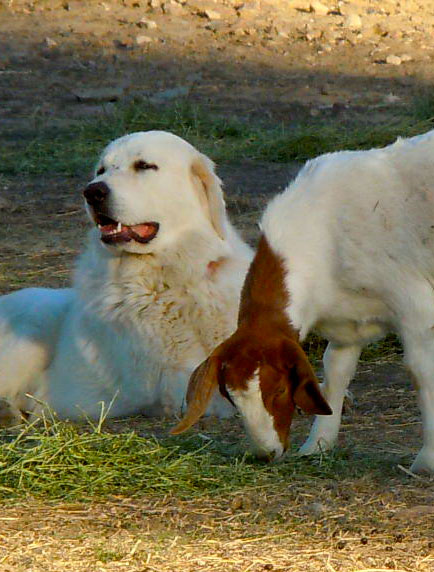
Goat-Dog-1_Web
Working Dog Liability Insurance (WDLI) is for livestock producers, who use guardian and herding dogs to protect their livestock from predators and other risks, and to assist in the management of their flock or herd.
Frequently the producers have no liability protection from incidents related to the guardian and herding dogs.
Most farm and ranch insurance policies exclude working dogs or dogs which “may show aggressive tendencies.” WDLI is managed and serviced by Food and Fiber Risk Managers. They understand the business, and know that livestock production is your livelihood, and have your best interest at heart.


Brenda M. Negri served as a consultant to the American Sheep Industry owned insurance company’s Working Dog Liability Insurance program, https://workingdogliabilityinsurancedotcom.wordpress.com. She authored it’s Loss Prevention Manuals and assisted in creating and implementing the ground breaking program in 2015 and 2016. 

Check out Liability Insurance today.

Tuesday, January 8, 2019

When Will LGD People Learn?

On Facebook, a graphic but short photo of one LGD is hit down and dragged off by wolves in the brush. This time is so beyond late. Read the rest yourself, or go on my page and see it yourself from The Way of The Pack: Understanding and Living With Livestock Guardian Dogs.


On here is another country and a scaring, very graphic photo of an LGD being attacked over a pack of wolves, and drug off because he is alone. Too many American farmers, the little goats and sheep people who want to prance around in their cute critter pets, and show up one or two LGDs - then do not understand in night, how their pack attacks and kills over LGDs. And too many braggart women think that everything is controlled and cute, and all they need to do is stay in their little house in their kitchen, read their Facebook and make comments, watch TV, yell at their kids and eat more food and become pigs and gluttons. Those mind-sets of women in USA particularly on many farms and small "boutique" ranches that are being pranced around by people, are the ones who don't have time to watch their good dogs, do not stay with them, and listen and watch and learn. It is why so many 100's of people now, are getting the "brain." And they are getting out and buying my book, of more than 40 chapters, and more than 320 pages, tons of photos and resources and more. It is time people to be in tuned with your dogs. Every day, in and out, all the time. Carefulness, mindfulness, self assessment. The five words I began over these dogs from the start of my book. And where are you? Did you even study, think and understand?:
Patience
Compassion
Respect
Trust
Consistency
This is what builds up the LGD packs. Pairs, trios, quads, and more if needed. This is what the entire fact of my years of putting this book up and showing great, time and tested owners who were on these dogs for years over many countries! Yes, in Spain, in France, in Italy, in other places! But it is also not just showing up two puppies from some other world, and think they are tough and smart and always bragging. No, that is not the answer either. Why I have owned more than $1,000's of the best carlancas and bracelets for several countries, from the finest men who build this work, is why. When will others learn too?


/////


En Spain:
Aquí hay otro país y una fotografía muy gráfica y aterradora de un LGD siendo atacado por una manada de lobos, y drogado porque está solo. Demasiados granjeros estadounidenses, las pequeñas cabras y las ovejas que quieren andar con sus lindas mascotas critter, y mostrar una o dos LGD, entonces no entienden en la noche cómo ataca y mata a su manada sobre las LGD. Y demasiadas mujeres braggart piensan que todo está controlado y lindo, y todo lo que necesitan hacer es quedarse en su pequeña casa en la cocina, leer su Facebook y hacer comentarios, ver televisión, gritarles a sus hijos y comer más y convertirse en cerdos. y glotones. Esas mentalidades de mujeres en los EE. UU., En particular en muchas granjas y pequeños ranchos "boutique" que están siendo elogiados por personas, son los que no tienen tiempo para observar a sus buenos perros, no se quedan con ellos, escuchan y escuchan. mira y aprende. Es por eso que tantos cientos de personas ahora están recibiendo el "cerebro". Y están saliendo y comprando mi libro, de más de 40 capítulos, y más de 320 páginas, toneladas de fotos y recursos y más. Es hora de que la gente esté en sintonía con tus perros. Todos los días, dentro y fuera, todo el tiempo. Cuidado, atención plena, autoevaluación. Las cinco palabras que comencé sobre estos perros desde el comienzo de mi libro. ¿Y donde estas? ¿Estudiaste, pensaste y entendiste ?:
Paciencia
Compasión
El respeto
Confianza
Consistencia
Esto es lo que construye los paquetes LGD. Parejas, tríos, quads, y más si es necesario. ¡Esto es lo que hace todo el tiempo de mis años de publicar este libro y de mostrarle a los grandes propietarios, a los que hemos probado, el tiempo y la experiencia de estos perros durante años en muchos países! Sí, en España, en Francia, en Italia, en otros lugares! Pero tampoco es solo mostrar a dos cachorros de algún otro mundo, y pensar que son fuertes, inteligentes y siempre presumiendo. No, esa tampoco es la respuesta. Por eso he poseído más de $ 1,000 de las mejores carlancas y brazaletes para varios países, de los mejores hombres que construyen este trabajo, es la razón. ¿Cuándo aprenderán otros también?


Monday, January 7, 2019

Mary Robbins’ Review of The Way of The Pack: Understanding and Living With Livestock Guardian Dogs

Mary Robbins’ Review
of
 The Way of The Pack:
Understanding and Living With
Livestock Guardian Dogs
Written in September 2018 by Brenda M. Negri


Mary Robbins of California and a long-time LGD and sheep rancher, has an excellent review on my book. Enjoy:

  This book by Brenda M. Negri is written in a short snappy way that reads like an instruction manual on the proper handling of livestock guardian dogs (LGDs). Brenda Negri explains the reasons for everything in an easy to understand way.  She brings 40 years of experience with livestock, predators, and study of LGDs both here and abroad and shares it with the reader.
This book is a must have for anyone wanting to purchase their first livestock guardian dog.  Brenda Negri begins by discussing the ancestral uses of guardian dogs to protect flocks and herds since earliest times, setting forth descriptions of how the dogs are used on open range situations as they accompany their masters’ herds through the mountains and valleys of their native lands.  She debunks the original theory that these dogs should not be socialized by human contact.  Instead she gives evidence not only that these dogs respond to socialization with their human owners and families, but they requireit for a healthy mind and psychological development. In fact, she shows the reader that these dogs historically were never alone with herds but have always been equal partners with the shepherd in protecting the flocks.  
I have owned livestock guardian dogs for 30 years.  Our first dog was purchased from a rancher in Idaho who sternly warned me against giving any attention to the puppy since it would “ruin” him as a livestock guardian.  Luckily my 4 children and husband ignored that prohibition, and Maverick became not only a great guardian, but a terrific member of our ranch family.  
She discusses training of the dog – training isnecessary for both LGDs andtheir owners if they are to reach their true potential. Being able to handle the dog calmly and safely is essential.  She gives great advice on nutrition, shelter, health, first aid, and protection of the guardian dog where the predator load is heavy.  She warns the first-time buyer that the first thing they need to invest in should be qualityfencing before ever bringing a dog home.  She talks about other ways to protect the flock or herd, both without a guardian dog and in conjunction with a guardian dog.  
She goes on to point out that these independent thinking guardian breeds are different than normal dog breeds, and a successful relationship between these dogs and the owner must be much closer than just putting the dog in a pasture with livestock.  The owner must be receptive to the dog and understand the behaviors they are seeing. She discusses body language between the dog and the owner.  The dog and owner must learn to trust and rely on each other for the partnership to be successful.  Then she emphasizes that there are differences in the way different breeds protect, and the importance of finding breeders that will mentor the new owner through any questions or problems when they have purchased their dog.   
            Experienced owners of LGDs will find a great deal of information in this book too.  Owners who have problems will find answers in here.  Owners doing the right thing will find support.  The reference section contains excellent additional reading sources. 
In particular, Negri seeks to show that many owners underestimate the number of dogs they should be using to protect their livestock. She points out that the number of LGDs should not be based on number of sheep or acres but should be based on number and type of predators and terrain. In the foothills of Los Angeles where I live, the coyote population is so high that I need at least 3 dogs for my 5 steep, brushy acres.  No lethal animal control measures are allowed within the city limits, so my dogs work hard to defend our sheep.   Even with a 3 LDG pack, we need to lock our flock up at night in order to give our hardworking dogs a rest.  My son, on the other hand, might only need one dog on his flat, open 5 acres outside Santa Maria.  I have lost several sheep to coyotes, necessitating the addition of the 3rddog.  My son has not even lost one of his free-range chickens.  
            The Way of The Pack might be to some readers a misleading name.   “Pack” connotates danger.  A wolf pack, a feral dog pack, is threatening, but when documentaries on wolves refer to the pack as a family unit it is seen as nurturing and supportive. A pack has structure.  The pack is stronger by its very nature than only one or two individuals.  This is the idea that Brenda Negri is trying to get across in her book.  The livestock guardian dog “pack” is better equipped to protect because of its structure.  Every individual has its place in the pack and the pack works together to protect and defend.  There is safety in numbers when LGDs must defend against larger or more numerous predators.
            Nor does the livestock owner have to have a huge pack of 20 dogs.  The pack can be any number from 2 dogs to 4 to whatever number is needed for the predator load.  The owner must determine the number of LGDs necessary and ensure that the makeup of the individuals work together for the health of the pack, and its solidarity. Anyone with more than 2 LGDs has a “pack”.  It is the responsibility of the owner to determine necessary pack structure. 
            Guardian dogs will assign different roles to themselves. In the instance of danger, I have seen my own dogs split up, one dog running back to move the flock to safety and stand between its charges and danger, while the other goes out to face the perceived threat.  The pack cooperates and works together.
This then is The Way of The Pack, the correct number of the right dogs working together with their owner to protect their charges. The Way of the Pack, The Way of the Family.  As Negri puts it the owner is not an alpha ruling the pack, but a parent leading the family, caring for the family, and nurturing the family.
If you have, or are considering getting, an LGD, this book needs to be on your shelf.
This is an unsolicited review.  I did not receive any compensation for this review. I purchased this book myself. – Mary Robbins

Sunday, January 6, 2019

"Show Me: Sand the Floor"


Sunday, December 30, 2018

A New Year: Be Kind to Your LGDs and Dogs

On this new year, take your time to be kind with your dogs.
Choose wisely. Be patience. Know God's path and truth support you and your dogs.
Happy New Year from all of you.
God Peace to you all from Brenda M. Negri and my pack of dogs in Nevada,


Sunday, December 16, 2018

Fladry fencing to prevent wolf/livestock conflict


I hope to see more LGD people tuning into good things like this from People and Carnivore.

More things to think about, and hopefully getting the farm people on top.

Sunday, December 2, 2018

Truth and Persistence With LGDs

"The Lord will give goodness: and our earth shell yields her fruits."  -- Psalm 84:13


Showing everyone their truth, persistence, and humbleness, will be best on those who live with their Livestock Guardian Dogs. From my book, The Way of The Pack: Understanding and Living With Livestock Guardian Dogs, shows this time and time. Read these works, study them, think over them. Wisdom and faith comes on in the end.

/////

On Being the Good Shepherd
From The Way of The Pack:
Understanding and Living With
Livestock Guardian Dogs 

“…neither shall the flock be lacking in obedience to the Shepherd nor the Shepherd be lacking in watchfulness over the flock.”  
--- Roman Catholic Daily Missal, Proper of the Saints, Postcommunion, St. Gregory VII
The Way of The Pack is based on good shepherding. Before focusing on the dog, we focus on you. That is what makes it both simple, yet difficult. Owning the best livestock guardians there are means nothing in the hands of a lazy, cruel, impatient or incompetent shepherd. Here are some of the key elements of a good shepherd. You may be surprised at what is listed, but really, you shouldn’t be.

Focus. “This one a long time I have watched. All his life has looked away…to the future, to the horizon. Never his mind on where he was. Hmm? What he was doing.” – Yoda, Return of The Jedi.  Be here now. The good shepherd is living in the present and focused on the task at hand. Don’t have a “monkey mind” - scattered and jumping all over the map. Don’t negative forecast. A great percentage of problems with LGDs stem from unfocused, short-attention span shepherds who are distracted and out of balance. I blame this on too much Internet and social media. Focus is vital to being a competent LGD owner. Leave your cell phone off or in the house when you go outside for puppy training time. No texting, no tweeting! Be centered. Be with your LGD and focus.
Common sense. “Common sense is not so common.” – Voltaire. Cultivate it. Some old timers wryly note common sense seems to be fading from humanity and this sadly includes the agriculture community – but give us hope: develop some and use it. If it means asking your elders for their words of wisdom based on their years of experience you lack, then humble yourself and do so.

Patience. “Patience is bitter, but it’s fruit is sweet.” – Aristotle. Why are you in such a hurry? Will the world stop turning if you don’t get the sheep in your barn exactly at the time you think they should be? Of course it won’t. Will it end simply because your 12 week old LGD pup chased a hen for the first time? Absolutely not. The world is too fast; the movies we watch are hyper-paced, the roads we travel are checkered with speeders, the holidays have turned into a mad, frenzied rush. Why not step back, contemplate what is around you, and slow down? Rearing an LGD pup takes infinite patience to succeed and do well. Be patient with your LGD, and do not rush him.


Perseverance and persistence. "You cannot slay the dragon every day. Some days the dragon wins." – Colin Powell. Nothing worth having comes easy. Part of farming and ranching is getting up every morning, and dusting yourself off when you fall, and going again. Legendary rancher and horseman Tom Marvel once quipped to me, “If you have livestock, inevitably you will have dead stock.” You don’t quit just because you lose something or fail at a task - that is, not if you have persistence. “The master has failed more times than the beginner has ever tried.” .....


......You have just began the story and the book. Much more left for you to read!
YOU, the one who waits and waits for the time yet keeps making excuses, YOU read the rest of the key elements of my book for you to read it and study and think, too. Only this kind of focus will show you the way.


Monday, November 12, 2018

The foreword from a truthful author, great patient, friend, and faithful follower

"The greatness of a nation and its moral progress can be judged
by the way its animals are treated."     ~Mahatma Gandhi

As my day goes tired as days end, and my long sometime death dying soon sometime for my world, my way is still on ward, always, tired, sooner, but focused and final, even with ticking days of less time, fewer words, less choice, content with what will come. Peaceful and kind with peace. Being able to look the other way, with no care, no worry. All what has been good, is what has counted. The Way of The Pack, in souled hearts of dogs, again so many years in time. Always waiting back for more time and never too focused on truth, is when dog owners remember. But in good time at the end of us, from our their problems, frustration, and think too much in their mind. Looking at the new people, but learning how to just be quiet from them, watch, listen and heard tales and time. Simply breathing. Being souls that move on, onward. All it is, is for us. Learn now. 
Take the time to breath and be again quiet with your LGDs.


Some years ago, I lost my first hen to a coyote and I researched Livestock Guardian Dogs. I read that LGDs must be raised with and bonded to livestock, such as sheep or goats and should rarely be handled by humans. At the time, we lived on 5 acres, owned poultry, and our animals were family to us. On many levels, that advice simply did not work for us. 

A few months later, I lost my second hen to a coyote and I looked again. This time I found Brenda Negri’s website. Her common sense approach to using Livestock Guardian Dogs on a homestead, and raised with families was a breath of fresh air, and a glimmer of hope for us, and my aspirations of raising rare birds.

I contacted Brenda, and talked with her extensively about her dogs, and their requirements. I have owned large dogs most of my adult life, and believed I could easily bring these gentle giant protectors into our home life. Brenda said they were different, but I did not appreciate just how different these dogs are, until I brought a pair of sibling pups home. 

Actually, Brenda counseled us as to the value of owning a sibling pair, a concept I was not familiar with at the time, but have since come to appreciate. Once home with these pups, I quickly saw the wisdom of having at least two. They had each other to play with; they bonded to each other, and kept track of each other. To this day, if one of a pair needs assistance, the other is first to sound the alarm bringing us, and the rest of the pack to aid. 

Brenda continues to be a valuable resource for us and our dogs: from training the pups to chickens; discouraging excessive, unnecessary barking; special health considerations for these large dogs; and integrating new adult dogs into a pack. Her advice is sprinkled with the admonition to observe the dogs, and how to respond to their behavior. 

In the United States, current practices for raising and using Livestock Guardian Dogs runs the continuum from a hands-off feral dog living on substantial acreage with little to no human support to a pet dog, suitable, somehow, to life in the city. To find what is most appropriate for these very special dogs, we must look to their history. Guardian dogs have been bred, and selected over thousands of years to live with, and bond to their livestock, and also to live with and bond to their shepherd’s family.

This is the basis for Brenda Negri’s advice on the use, training and treatment of LGDs. The truth to this practice is the success of her many customers, myself among them. You do not command obedience from these dogs. You work alongside these dogs, as part of the team. 

We now live on a 55-acre farm, with goats, chickens, cats, and of course our pack of beloved guardian dogs. We have two sets of two sibling pairs of Livestock Guardian Dogs to protect all of us. We are in the midst of cougar, bear, and hawk predators. We are surrounded by packs of coyotes. Neighbors have had losses; we have had none. At the same time our dogs can be safely approached by visitors, treated by vets, and petted by children.

We attribute our success to learning…. The Way of The Pack.

Barbara Judd
Froghaven Farm
Salkum, Washington


The Way of The Pack: 
Understanding and Living With 
Livestock Guardian Dogs

Brenda M. Negri
$35.00 on Amazan.com.


Search This Blog

Popular Posts!